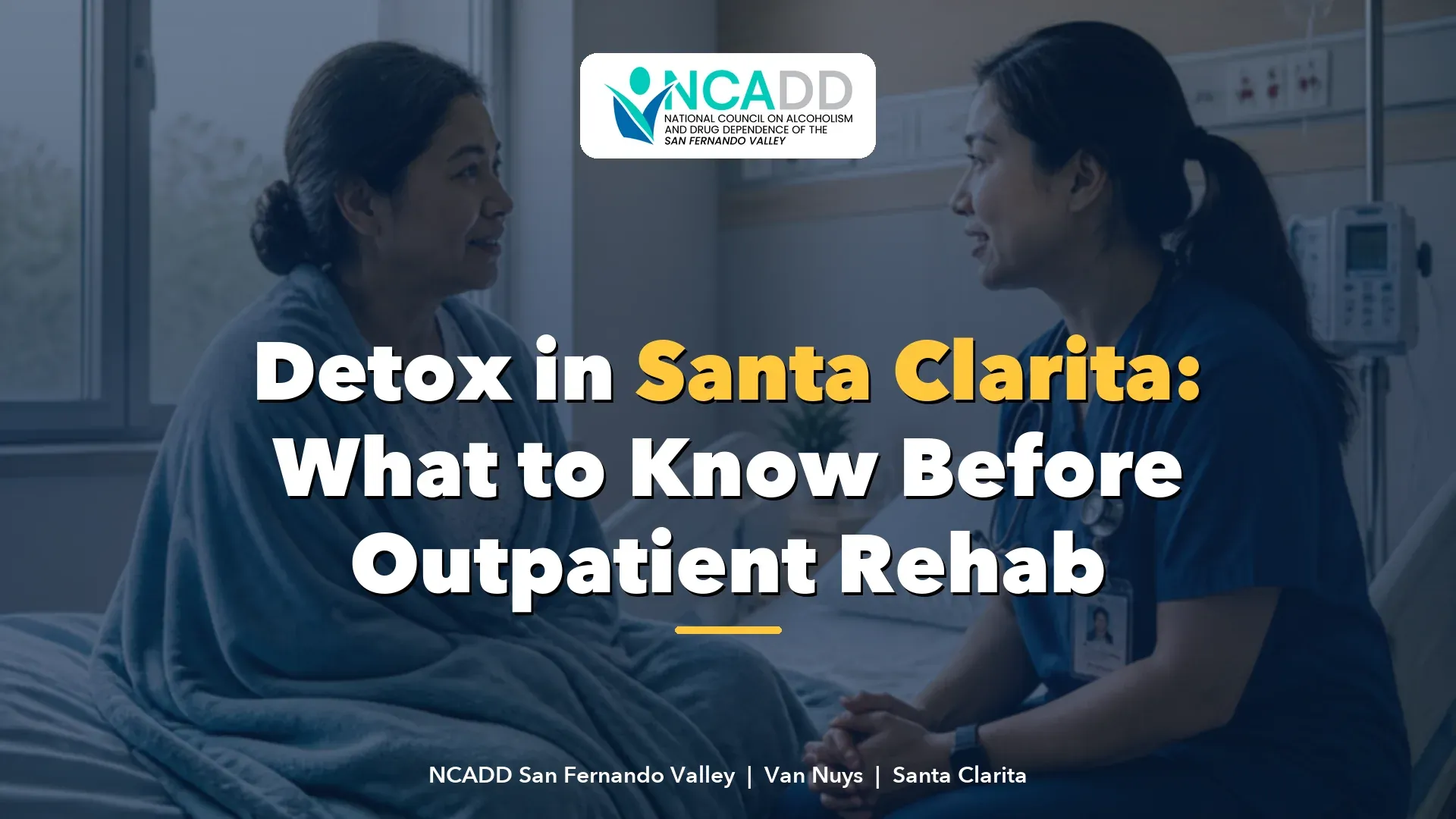
If you typed “drug detox Santa Clarita” into your phone, here is the short answer. Detox is the medical part of stopping, and it comes before outpatient rehab, not in place of it. NCADD San Fernando Valley does not provide detox. We are an outpatient program. What we can do is help you plan both sides of it: a safe way into withdrawal care, and the step right after, which matters more than most people expect.
If someone is having a seizure, can’t stay awake, is confused or seeing things, or might be overdosing, call 911 now. Don’t wait to read the rest.
What detox actually means
Detox is the everyday word for withdrawal management. It helps your body get through the first days without alcohol or drugs as safely as possible. That can mean medication, fluids, rest, blood pressure checks, and someone watching for warning signs.
Detox is not the same as treatment. It deals with the body, not with why you used or what sets off your cravings. The National Institute on Drug Abuse says medically assisted detox is only the first stage of addiction treatment and, by itself, does little to change long-term drug use.
That’s why the plan for after detox belongs inside the detox plan.
Which substances need medical supervision
Some withdrawals are miserable but rarely life threatening. Others can turn dangerous fast. Let a doctor or nurse help you decide where to detox.
Alcohol detox
Alcohol withdrawal is one of the riskiest. According to MedlinePlus, from the National Library of Medicine, symptoms tend to start within about 8 hours of the last drink. They often peak in the first one to three days and can quickly become life threatening. Severe withdrawal can bring seizures and delirium tremens, often called the DTs.
People who drink heavily every day, who have had seizures or the DTs before, or who have other health problems usually need a medical setting. Some people with mild symptoms can be treated as outpatients, with a doctor’s plan and someone staying with them. MedlinePlus explains alcohol withdrawal and its warning signs in plain language.
Benzodiazepines
Pills like Xanax, Valium, Klonopin and Ativan should never be stopped suddenly on your own. The FDA warns that stopping them abruptly or cutting the dose too quickly can cause withdrawal reactions, including seizures, which can be life threatening. The safe route is a slow taper planned with a doctor. That holds true even when the pills were prescribed to you.
Opioids, including fentanyl and heroin
Opioid withdrawal feels awful. Body aches, chills, sweating, stomach cramps, vomiting, diarrhea, anxiety and sleepless nights are common. MedlinePlus describes it as painful but usually not life threatening. The vomiting and diarrhea can cause dehydration, so medical support still helps.
With heroin and fentanyl, the bigger danger usually comes after withdrawal, which we explain below. Medications for opioid use disorder can make this stretch much easier, and some can begin during or soon after withdrawal. With fentanyl, timing the first dose takes a doctor’s judgment. Our plain guide to buprenorphine, methadone and naltrexone explains how each one works. If you need fentanyl or heroin detox, ask every program you call about medication.
Meth and cocaine
Stopping meth or cocaine does not usually cause the dangerous physical withdrawal that alcohol can. The crash is still hard. Expect exhaustion, long sleep, strong cravings, irritability and low mood. Massachusetts state treatment guidance, which draws on SAMHSA, notes that some people have thoughts of suicide during this time, especially if they already live with depression.
If you or someone you love is having thoughts of suicide, call or text 988, the Suicide and Crisis Lifeline. It’s free and open 24 hours a day.

Levels of detox, from hospital care to outpatient
LA County’s treatment system uses detox levels set out by the American Society of Addiction Medicine (ASAM). In plain words, they run from most to least intensive.
Hospital or medically managed inpatient detox. For severe or unstable withdrawal, or serious medical problems. Doctors and nurses are there around the clock. If you need inpatient detox in the San Fernando Valley because of past alcohol seizures or the DTs, ask about this level.
Medically monitored inpatient detox. A facility with 24-hour nursing care and a doctor available as needed.
Residential detox. You stay overnight in a supportive setting with staff on site. It can suit moderate withdrawal when you need a safe place but not intensive medical care.
Outpatient, or ambulatory, detox. You go home at night and a clinic checks on you regularly. This can work for mild to moderate withdrawal if you are medically stable and have a safe, sober place to stay with someone around.
The right level depends on what you use, how much, your health, and how past withdrawals went. A short assessment sorts this out. You don’t need the answer before you call.
How to find drug detox in Santa Clarita and LA County
Typing “detox near me” late at night brings up a long list of ads and call centers. Here is a calmer way to find detox centers in Santa Clarita and nearby.
- Call the LA County Substance Abuse Service Helpline at 1-844-804-7500. It now connects to the county’s 24/7 help line, which you can also reach at 1-800-854-7771 (press 2 for substance use). Staff can screen you and refer you to withdrawal management in the county network.
- Check open beds online. The county’s Service and Bed Availability Tool shows programs in the county network with real-time bed availability.
- Call the number on your insurance card. Your plan can tell you which detox programs are in network.
- Talk to your doctor, especially the one who prescribes your medications. They can plan a safe taper or refer you.
- Go to an emergency room or call 911 if withdrawal turns severe.
The SAMHSA National Helpline, 1-800-662-4357, is free, confidential and open any time.
If you have Medi-Cal, the county system is your main door into drug detox in Santa Clarita and the rest of LA County. Its Medi-Cal substance use benefit includes withdrawal management. NCADD-SFV receives funding through LA County Substance Abuse Prevention and Control. Our page on county-funded treatment and Medi-Cal explains how staff can help you apply.
You can call us too. Our care coordination includes referrals for detox and hospital care, and we can set up your outpatient intake for afterward.
One caution: a program that offers free flights or cash for signing up is a red flag.
Why the days after detox are the most dangerous
Here is the part the ads leave out.
During detox, your tolerance drops. Your body is no longer used to the amount you were taking. If you leave detox and use the same amount as before, it can stop your breathing. MedlinePlus says it plainly: most opioid overdose deaths happen in people who have just detoxed. With fentanyl mixed into so much of the street supply, the margin for error is even smaller.
It’s not only opioids. As our medication-assisted treatment page explains, the days after detox from opioids, alcohol or benzodiazepines carry the same danger. Medication combined with counseling can lower the risk of relapse and overdose.
A few steps lower that risk:
- Go from detox straight into treatment, with no gap in between.
- Ask about medication before you leave detox, especially for opioids or alcohol.
- Keep naloxone (Narcan) at home, and make sure the people you live with know where it is.
- Tell someone you trust about your plan, and let them check on you.
If you think someone is overdosing, call 911, give naloxone if you have it, and stay with them.

Setting up outpatient rehab before detox ends
The best time to call an outpatient program is before you finish detox. That way your first appointment is already on the calendar when you walk out.
At NCADD-SFV, it starts with a free, confidential phone screening. A counselor asks a few questions about what you’ve been using, your health and your schedule. In most cases we can schedule your intake within 24 hours of that call. At intake you get a full assessment and build a personal treatment plan with your case manager or counselor.
From there, care might include:
- Outpatient (OP): individual and group counseling around work and family, 1 to 5 days a week, lasting at least 90 days.
- Intensive outpatient (IOP): closer support, usually 9 to 19 hours a week, while you live at home.
- MAT with counseling: our Medical Director, Dr. Dagmar Liepa, an addiction medicine specialist, decides with you whether medication fits. If you started a medication in detox, ask about continuing it.
- Recovery support services: aftercare once your main program ends.
Read more about our outpatient and intensive outpatient programs, where certified and registered counselors use cognitive behavioral therapy, motivational interviewing and relapse prevention.
Our Santa Clarita outpatient center on Lyons Avenue is a short drive from Newhall, Valencia, Saugus and Canyon Country. It’s open Monday to Friday from 8:30 am to 9:00 pm and Saturday from 9:00 am to 5:30 pm. If you work down the 5 in the Valley, our Van Nuys center offers the same programs.
We accept Medi-Cal and are in network with Evernorth (Cigna), Aetna, Optum, Magellan and Blue Cross Blue Shield. Affordable self-pay is available too. Staff will verify your coverage before you start.
Frequently asked questions
Does NCADD-SFV offer drug detox in Santa Clarita?
No. We do not provide detox, residential or inpatient care. We are an outpatient program. We can help you think through which level of withdrawal care to ask for, give referrals, and have outpatient treatment ready when detox ends.
Can I detox at home?
Sometimes, for mild withdrawal, with a doctor’s plan and someone staying with you. Never stop alcohol or benzodiazepines suddenly on your own if you have been using them heavily or daily, because seizures are possible. Talk to a doctor first.
Does Medi-Cal pay for detox in LA County?
LA County’s Medi-Cal substance use system includes withdrawal management. Call the county’s 24/7 help line at (800) 854-7771 and press 2 to be screened and referred. If you are not on Medi-Cal yet, our staff can help you apply at your intake appointment.
What if I can’t find a detox bed right away?
Keep calling the helpline, check the county bed tool, and talk with a doctor. If opioids are the problem, ask about starting medication, which doesn’t always require an inpatient stay. If symptoms become severe, go to an emergency room or call 911.
Can I set up outpatient rehab while I’m still in detox?
Yes. Call us for a phone screening while you are in detox, and we can line up your intake for right after you leave.
You don’t have to figure out detox and rehab by yourself. Call NCADD Santa Clarita at (661) 253-9400 or NCADD Van Nuys at (818) 997-0414 for a free, confidential screening. We’ll help you think through the safest next step and have a place ready for you when detox is done.